Harley’s Journey: Cleft Palate Troubles

As discussed in my prior post about my daughter, Harley was one of the many babies with Velo-Cardio-Facial Syndrome who was born with a cleft palate. This meant feeding issues as well as at least one surgery needed.
From the time Harley was born, feeding was a problem. I was quickly informed that a baby with a soft cleft palate like hers completely lacks suction and cannot breastfeed, so normal breastfeeding was out. We were given bottles known as Mead Johnson Cleft Nursers, made especially for cleft palate babies. These bottles have a curved nipple for angling the liquid down and away from the hole in the roof of the mouth and a soft milk container that can be squeezed in lieu of suction. Although they got the job done, I have to say that these bottles were not that great. Within three months Harley was beginning to want to hold her own bottle and feed herself, but the sides of these bottles were too hard for a baby that small to squeeze, so she would get frustrated. By the way, Harley has always been incredibly independent like that.
I had the option of pumping breast milk and feeding it to her with the squeeze bottles or switching to formula. I have read the arguments about breast milk v. formula, and everyone agrees: breast milk is better. At first I tried hard to pump breast milk for her and feed it to her with the bottles. Unfortunately, my body knew the difference between a baby’s mouth and a machine, and it did not like putting out for the machine. I could not keep up with Harley’s feeding demands and began having to supplement formula. Within 4-6 weeks I gave up and switched to formula entirely.
My thoughts on breastfeeding v. bottle/formula feeding are probably deserving of another post altogether, but suffer it to say that I haven’t the least bit of regret in my decision. I gave up on one aspect of motherhood that I was not very good at so that I could focus on Harley’s other needs, and saved myself a lot of stress and heartache in the process. I feel pretty sure at this point that when I have another child, I’ll only breastfeed her for 6 weeks and then switch to formula again.
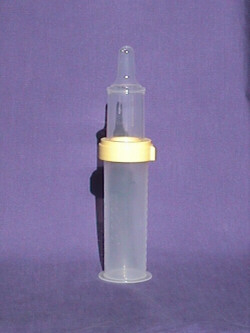
The good news is, Harley had no trouble switching between breast milk and formula and has always been a good eater. When Harley was about six months old, the doctors in Washington introduced me to a marvelous invention for cleft palate feeding known as Haberman bottles. They’re more expensive and flimsy than the cheap squeeze bottles, but I was able to have Harley’s insurance cover them. The Habermans allowed my daughter to feed herself for the first time in her life, and that was worth paying for. If your child has a cleft palate and you’re interested in checking them out, here is a web site that sells them. I can’t recommend them enough. Also, the people at Mothering From the Heart were always knowledgeable, sweet and helpful when I called to order the bottles.
When Harley was fifteen months old, it was time for her cleft palate to be repaired. The method of repair used was called a double opposing Z-plasty. Harley was only in surgery for a few hours and only had to stay in the hospital for one night. Six weeks of eating mostly Jell-O later, she could finally suck from bottles and sippy cups normally. At 25 months of age she still has not said any words beyond “Nana” or “Mama,” but we remain hopeful that this will improve with speech therapy. We are working on teaching her sign language and so far her cleft repair seems to have gone over well. Now she eats and drinks like a normal 2 year-old, with the exception that she has trouble with straws and has never really understood them. But other than that, we are happy with how her cleft palate repair went.
Comments

Harley’s Journey: Cleft Palate Troubles — 6 Comments

  1. Hi, I’m megan and I have a six month old daughter named Mylee. She also has a cleft palate (soft palate) and she will be getting surgery when she turns a year old or so. I am freaking out though! i absolutley want her to get the surgery so she can eat, drink and talk like a normal little baby but at the same time I’m a wreck about the whole thing!…they say we have the best craniofacial surgeon…in our area anyway. We haven’t met with him yet to discuss exactly what will be taking place during surgery or after. But mother to mother…how was it? I’m just wondering how horrible or not so horrible it is to go through :/….And I’m so happy for you and your little girl, thats’s fantastic. Well, i hope you get back to me. talk to ya soon.
  2. Hi Megan, I’m happy to hear from you. Harley’s cleft palate repair surgery was a lot less worrisome than I expected, but this could in part be because it was the second time I watched her go through surgery. In-depth account?
    She had the surgery when she was about 15 months old. On the day of the hospital I took her in alone and they had me put her in these toddler hospital PJs. She got fussy and nervous at that and began to cry, so they gave her some kind of oral drug which immediately made her relax and start smiling, made her very loopy. They put her onto a bed and took her away, and I went to the waiting room and watched the monitor for updates to her surgery.
    The surgery took 3-4 hours, and I passed the time on my laptop. I had to leave to pick up my husband from work after the first two hours, but I had arranged for my father to come to the waiting room in my place. That’s very important: there must be a family member there at all times so the doctors can ask you what you want done if there is a life-threatening emergency. I didn’t know that the first time my daughter had surgery.
    By the time my husband and I got back to the hospital, she had just come out of surgery and her grandfather was in her recovery room with her, the surgery had gone smoothly. As the drugs wore off she was very fussy. When she screamed we could see the black stitches in the back of her throat. For the first 16 hours after the surgery she wouldn’t eat anything.
    She was expected to stay two nights in the hospital, but recovered so quickly that she only stayed one. Her father stayed with her for that one night; I’d planned to take night 2 but it didn’t happen. Typically only one parent can remain overnight with a child.
    She had to wear these things on her arms called “no-nos” to keep her from touching her mouth; you can see them here. She hated them. The ones the hospital gave us were cheap and ripped after a few days, and I couldn’t get any good information on where to get replacements, so we wound up not using them for the most part and just swatting her hands from her mouth. Besides, her grandma was a big softie and would always take them off when we visited.
    Harley was very fussy for the first few days, and was a finicky eater, but she did eat. We gave her pain-killer meds with a sedative in it to make her sleep at night and make her go down for her nap for the first week or two. We fed her a TON of Jell-O and pudding and soup and soft vegetables. She still carries a huge love of Jell-O ever since.
    After about four weeks she was pretty much back to normal and still using Habermans; a few weeks later we started giving her normal baby bottles and sippy cups and she could suck from them just fine, though sometimes we had to make the hole in the bottle a little bigger. I weaned her from bottles altogether by 18 months, late I know but she had an unusual start.
    She can’t use straws, but that’s common even for kids who never had cleft palates. She still doesn’t talk much, but that’s probably because of her VCFS more than because of her cleft. Her hearing improved after the surgery so that she now tests on the edge of normal hearing abilities. Also, the cleft repair stitches fall out and (I guess) biodegrade on their own.
    At almost one year after surgery now, she’s doing great with sign language, eats like a normal two-year-old and is showing promising inflection in her squeaks and babble. We did a follow-up with the surgeon this summer and he says the repair went well and is adjusting with her growing mouth very well so far.
    Sorry for the long response Megan, I wish the best to you and Mylee and really hope this helps. It won’t be the funnest time for Mylee, but with extra love she’s probably gonna be just fine. <3
  3. Thanks Bridget for sharing your story. You have given me something I can relate to. My daughter Kylie is 2 months old with soft and hard palate. I had my mind fully set on breast feeding. In the hospital we were having problems with trying to get her to latch and suck properly which is when the nurses discovered she had cleft palate. I then began to pump and feed her through the Mead Johnson Nursers. My milk supply gradually decreased and I gave up at 4 weeks when I was only producing a half an ounce per pumping. I was pretty disappointed that I could not produce enough and tried many techniques to increase my supply such as herbal teas and all the other recommendations I read up on.
    I have gotten used to the Mead Johnson bottles and Kylie feeds well from them. They can be messy at times and leak around the edges. My concern was that when she got older it would take much more time and effort to feed her since she will be drinking more. I was also disappointed that she would not be able to gain her independence to feed herself. Thanks for the input on the Herberman bottles. The doctors say she has a strong suck for a child with cleft palate. I was wondering since your daughter was able to feed herself with the Herberman bottles does that mean that these bottles eliminate the procedure of squeezing the milk into their mouth? If so did you have problems with the milk coming back up through her nose?
    Thanks also for sharing your story of her surgery and recovery. I am hopeful for the surgery but am also very scared to have her go through such an experience.
  4. Hi Kerri, thanks for sharing your story about Kylie. To answer your question, the Haberman bottles don’t eliminate the need for squeezing, they just make it possible for the baby to do the squeezing herself. They have an elongated nipple (you can probably tell from the photograph, it’s the part above the yellow cap) that’s very soft and easy for small hands to grasp. I’m not sure how the yellow cap part works, but the milk is continually drawn into the soft cap by the baby’s squeezing and attempts at sucking.
    Harley has always been very independent-minded and she was trying to reach up and grab the Mead Johnson cleft nursers and feed herself as soon as she was able, but the bottles were too firm and she lacked the coordination and strength to squeeze them properly. She was able to squeeze the Habermans and feed herself on day 1. I’m sure she could have done it much sooner if I had known about them, but I didn’t learn about them till she was about 6 months old.
    I found that milk through the nose happened less with the Habermans than with the Mead Johnsons because with the Habermans, Harley was in control, and babies instinctively have a good idea when to stop. Milk through the nose still occasionally happened, but I think that’s unavoidable with a cleft baby.
    My only complaints about the Habermans were: (1) they’re expensive, but I found out after the first few that my insurance would pay for them, and (2) since the caps are very soft, they wear out much faster than the Mead Johnsons. Harley teethed early too, so that may be why we wore them out so fast.
    I hope that’s helpful, and I’m wishing you and Kylie the best. It’s always rough to see the little ones have to do surgery, but they’re tough and it’s much better than the alternative.
  5. Hi Bridget,
    My son, Harlan just had cleft palate surgery yesterday. He’s home already but I’m wondering if you have any ideas of what I can give to him at mealtimes. He’s very hungry. The dr. said he can have ‘clears’ like applesauce, chicken broth, jello (which I don’t think he can eat)…he had a tongue release also so he is still on Stage 2 baby food at 13 months. Does the dr. really expect Harlan to survive for 6 weeks on ‘clears’? Can I give him the Stage 2 baby foods (not meats or macaroni & cheese or stuff like that) but how about puddings and baby food with some substance? Just wondering…
  6. Hmm, well Ella, your son is only 2 months younger than my daughter was when she had the surgery, and she did just great on Jell-O and baby food. I think Jell-O will work if you mash it down into small enough pieces, and Stage 2 baby food should definitely work so long as it doesn’t have chunks in it or anything. Pudding should definitely work as well.
    Gosh, I hope that’s helpful. Harley didn’t have a tongue release or anything and she was always pretty eager to eat solid foods.
    BTW, I’m chuckling at how close our kids’s names are. Good luck to you and Harlan with this.

0 коментарі:

Post a Comment